
Category

Entertainment

Category

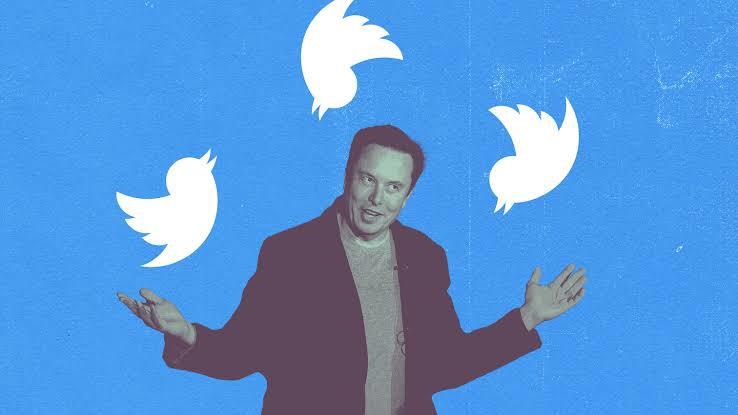
The future of the company has never been less certain two weeks after Elon Musk completed his purchase of Twitter.

One of the most influential social networks in the world has fired half of its staff in the past week alone, alienated powerful advertisers, blown up key features of its product, then repeatedly launched and unlaunched other features meant to make up for it and experienced a departure of senior executives.

With additional senior departures, escalating confusion over fake verified accounts, and an unusually public censure from the US government on Thursday, the wild swings at Twitter only seemed to get worse.

It’s a startling turn of events for Musk, who paid $44 billion for the business, as well as for a platform used by some of the world’s most influential individuals, including presidents, CEOs, and the pope.

On Friday, it appeared like there might be no end to the inconvenience. Twitter has changed its position on the issue and announced that it would reintroduce a grey “Official” badge for a restricted group of accounts to help verify their identities. The choice was made as Twitter had to fight off a flood of fake verified accounts this week, some of which were posing as Nintendo, the pharmaceutical corporation Eli Lilly, former President Donald Trump, and others. These accounts came about because of Musk’s hasty decision to offer a blue check mark to any account user willing to pay $8 a month, without asking any questions, as he searches for new ways to monetize the platform.

Just two days after its formal launch, that premium subscription service was also abruptly terminated on Friday. The only place the add-on had been made available was in the Twitter iOS app, where the menu option to sign up for Twitter Blue had previously been present. When the corporation might reinstate the offering was unclear at first.

The grey “Official” label has come to symbolize the recent whiplash that customers, staff members, and marketers have gone through.

Musk abruptly tweeted that he had “killed” the feature, requiring colleagues to explain the reversal. The grey badges, which were designed to assist users to distinguish between authentic celebrity and sponsored accounts and accounts that had only paid for a blue check mark, went live on Wednesday.

While a smartphone, tablet, or computer can be a very useful tool, excessive usage of these gadgets can have a negative impact on relationships, jobs, and education. It may be time to re-evaluate your technology use if you find that you spend more time on social media or playing video games than you do engaging with actual people.

You may overcome the habit and achieve a better balance in your online and offline lives by using these suggestions.

Put your phone aside one day of the week:

 Take active measures to control your cell phone use. Set your phone away one day every week (often a Saturday or Sunday). Make it a habit after that.

Modify the phone’s settings:

One of the most popular suggestions for limiting cell phone use is to change your phone’s settings.

The most typical suggestions are:

Set a longer passcode, use airplane mode, disable notifications, change the screen to black and white, remove distraction-generating apps from your home screen, and enable do not disturb.

Delete addictive apps:

Your likelihood of using your phone decreases with the reduction in the need to glance at it. Consider removing the app that gets the most use on your device.

Try removing certain apps from your phone for a few days, whether it’s Facebook, Instagram, or several games you play excessively. After a few days, if you feel more in control of your phone usage, you might think about reinstalling some of them.

Don’t charge your phone near your bed:

Do you want to know a wonderful way to put your phone away? Don’t charge it in your bedroom.

By keeping your cell phone out of your bedroom, you can avoid many of the side effects of excessive use such as bad sleep and hampered communication.

Make it difficult to use smartphones:

When we keep our gadgets next to our bedside tables, in our purses, or our pockets, we make it far too simple for someone to take them up and start browsing. The theory is that if you give something a little friction or deterrence, people will be less likely to do it.

You can make your device just functional enough to save you the effort of checking it by putting it in another room or locking it away. It might be enough of a deterrent to limit your use if you do something as easy as wrapping your phone in a hairband.

Apps for productivity:

The app gives you the power to change bad habits by giving you the flexibility to set your time limits with features like “alerts,” “take a break,” and “planned breaks.” When necessary, these capabilities can assist you in managing and restricting your consumption.

Get over your fear of missing out:

Learn to accept the possibility of missing out on things. When we check our phones most of the time, we find nothing interesting. Each of us has the ability to rule our own lives. Use your ability to break free from your phone and resume enjoying life.

Apple reportedly urged its suppliers to enhance iPhone manufacturing with the introduction of the iPhone 14 series since the company anticipated high demand during the holiday shopping season. However, it now appears that Apple has gone back on its plans as the company will no longer increase iPhone 14 production soon.

 Tuesday’s Bloomberg report stated that the sales of the iPhone 14 are insufficient to support the increase in production. The report says that “an anticipated surge in demand failed to materialize.” Typically, Apple ups its manufacturing at this time of year to match the demand of the holiday shopping season.

According to sources cited in the report, Apple’s initial goal was to produce at least 6 million extra iPhone 14 units by the end of the year. That scheme has now been abandoned.

Recently, Ming-Chi Kuo, an analyst, claimed that Apple had asked Foxconn to produce the iPhone 14 Pro at 10% more. The expert claims that the Pro models are by far the most popular iPhones this year, while sales of the standard iPhone 14 and iPhone 14 Plus have been “poor.”

The new phones’ beginning price points of $799 for the iPhone 14 and $899 for the iPhone 14 Plus are quite like those of the iPhone 14 Pro, which starts at $999 and includes a brand-new always-on display with Dynamic Island, a 48-megapixel wide camera, and the new A16 Bionic CPU.

The largest smartphone market in the world, China, is experiencing a severe economic downturn that has impacted domestic producers of mobile devices as well as the sales of the iPhone. According to a Monday report from Jefferies, purchases of the iPhone 14 series during its first three days of availability in China were 11% lower than those of its predecessor the year before.

Additionally, the world’s demand for personal electronics has been restrained by the Ukraine conflict, fears of a recession, and rising prices. According to estimates from industry watcher IDC, the smartphone market is anticipated to decline by 6.5% this year to 1.27 billion units.

Meanwhile, Apple continues to offer the iPhone 13 and iPhone 12 at lower costs, which some customers might find more alluring than the forthcoming iPhone 14.

Golden milk is a heated beverage made with milk, turmeric, and additional spices for flavor or health benefits. Golden milk is utilized as a medicinal elixir in the age-old, conventional Ayurvedic medical system. It gets its name from the color of the spice turmeric. Turmeric contains curcumin, a substance with powerful anti-inflammatory and antioxidant properties.  It is also referred to as turmeric tea or “Haldi doodh.”

Due to the addition of yellow turmeric to white milk, the beverage has a striking gold color. Due to its distinctive appearance, it has become increasingly frequent at specialised grocery stores around the nation as well as speciality coffee shops that advertise it as a “turmeric latte.”

Benefits:

The potential benefits of golden milk include:

  • Reduces inflammation
  • Prevents cell damage
  • Possibly reduces the risk of cancer
  • Boosts immune system
  • Aids digestion
  • Improves bone health
  • Lowers blood sugar levels
  • Reduces inflammation in the respiratory tract

How to make Golden Milk?

Ingredients:

1 cup whole milk

1 teaspoon turmeric powder, or to taste

3 to 4 whole black peppercorns

1 pinch of cardamom powder

½ tsp ground cinnamon powder

1 pinch of ground ginger

2 teaspoons Raw honey, or to taste

Method:

In a small saucepan, combine milk, cardamom powder, turmeric powder, cinnamon powder, ground ginger, and black peppercorns. Set over medium-high heat and bring just to boiling. Reduce the heat to low, cover, and simmer gently for 10 minutes, or until the milk is a golden color and has a lightly spiced flavor. Remove from the heat and pour the golden milk through a fine mesh strainer into a mug. Sweeten to taste with honey and dust with cinnamon if desired. Serve hot. 

In January 2021, Alice Bender used TikTok to make baby sleep popular. Bender, who was 21 at the time, spoke on her iPhone camera while holding her 5-month-old baby, Fern, in his nursery and explaining why he didn’t have a crib. She claimed, “We literally buy these small baby jail cells so that we can just walk away and put our baby in there. “I don’t have a crib because I’ll never make my child go to bed at a certain hour. Babies are people, too, and it’s cruel to make someone go to bed when they’re not exhausted. Imagine if your partner forced you to go to bed even though you weren’t exhausted and confined you in a space you couldn’t escape from. You would probably abandon them since that would be abusive.

A lop-eared bunny hopped on the ground in the distance next to a piece of white wooden furniture that resembled a crib but was just a few inches off the ground and was missing half of one side. According to Bender, a floor bed enables a baby to sleep when they want to sleep and get up and walk around when they don’t.

Before Bender took it down, the post had more than 7 million views, garnered international attention, and sparked a tonne of tweets (“Next week on this lady’s tik tok: why I let my 5-month child drive”). She continued to give suggestions for baby sleep though. She wrote, “There’s no such thing as sleep training,” in a post from August 2021, and Bender pointed to the words as music played. But it is possible to train a child who was left to die.

A parent from the past would find a lot of this video’s content to be confusing. (That item in her living room that resembles a drying rack with a ramp on it is actually a Pikler triangle, a climbing toy for babies linked with Montessori that acquired popularity on social media during the epidemic and has a retail price of close to $600.) But some information would be well known. #cryitout is one of the hashtags used in the article and it alludes to a technique that was first mentioned in the book The Care and Feeding of Children written by doctor L. 1894: Emmett Holt. According to Holt, if a baby is weeping at night and nothing appears to be amiss, “it should just be allowed to ‘cry it out.'”

Depending on the particular approach, this practice is now known as sleep training, progressive extinction, or Ferberization, but the basic idea hasn’t changed. Because babies can’t tell the difference between day and night at birth and can’t calm themselves, parents must educate them to fall asleep. Bender’s movies represent the “gentle parenting” school of thinking, which is skeptical of anything as strict as “teaching” your child. Following the baby’s lead in deciding when to sleep and wake up is a key component of gentle parenting.

Parents are still engaged in this struggle more than a century after Holt’s book was published. The discussion is taking place on TikTok, where Team Sleep Training is broadcasting its own chicly crafted propaganda, as well as in Facebook groups, Reddit threads, Instagram comments, and other places.

In Pakistan, Karachi serves as the primary centre for the gold market, and every city bases its gold pricing on Karachi Sarafa Bazar Association.

Despite the rupee loss against the US dollar, which lost Rs 6.01 during the week, the price of gold remained steady in Pakistan.

The All Sindh Sarafa Association’s rates for Friday show that gold prices remained unchanged at Rs147,100 per tola and Rs126,115 per 10 grams on Friday.

A day earlier, the price of gold rose by Rs. 1,200 per tola and Rs. 1,029 per 10 grams.

Based on worldwide rates and the rupee-dollar parity, the association establishes local prices. Market custom dictates that when the rupee appreciates against the US dollar and commodity prices rise on the global market, local gold prices often decline.

 It should be noted that the gold price stands below cost and is cheaper by Rs7,000 per tola compared to Dubai.

In the international market, bullion prices rose by $19 per ounce to settle at $1745; however, investors await direction on interest rates from US Federal Reserve.

Meanwhile, silver prices in the domestic market remained unchanged at Rs1,540 per tola and Rs1,320.30 per 10 grams today.

The Academy of Motion Pictures Arts and Sciences has invited distinguished members of the global film community to join the organization under various categories and our very own Mohammed Ali Naqvi is one of them. Recognizing his talent and vision, international acclaim and numerous awards in documentary and film making, Naqvi has been invited to become a member of the Oscars under the category of documentaries. It is indeed a moment of tremendous pride for Pakistan.

Mohammed Ali Naqvi is already a member of the Television Academy (Emmys) and IDA (International Documentary Association).

Overall 397 members have been invited in various categories. These member will henceforth be able to vote for the Oscar nominations and winners. Mohammed Ali Naqvi shares this honour with  newly-minted Oscar winners Billie Eilish, Finneas O’Connell  (music branch) and Kajol, Ariana De Bose and Troy Kotsar (actors); Paramount chief Brian Robbins and Disney general entertainment chief Dana Walden (executives); and film critic Leonard Maltin (members-at-large). Full list is available at www.oscars.org/news/academy-invites-397-membership

It is heartening to see that our talent is receiving global recognition and is sharing the stage with the big name of the world. The stage is set and the spotlight has started shining on our film industry, it is now for us to make the most of this opportunity and create an enabling environment for our stars to shine internationally.

Mohammed Ali Naqvi (www.monaqvi.com), is a well-known name internationally, and has won many accolades for his ground-breaking work. He is a Pakistani-American filmmaker whose films explore themes of human rights, social justice, politics, and identity in contemporary Muslim and South Asian narratives. His work is renowned for its stark presentation of dire poverty, clear-sighted examination of injustice, and probing analysis of political Islam. The recipient of two Amnesty International Human Rights Awards and a Grand Prix from the United Nations Association Festival, Naqvi served as Co-Executive Producer of the Netflix Original Top 10 docuseries Turning Point: 9/11 and the War on Terror. He received the inaugural Television Academy™️ Honor for directing and producing Showtime Original Shame, which documents Mukhtaran Mai’s path from a survivor of gruesome violence to a women’s rights activist.

Naqvi seeks narrative projects that emphasize multicultural perspectives in diverse stories and genres. He produced road-trip drama Big River and indie comedy I Will Avenge You Iago, starring Giancarlo Esposito and Larry Pine. Naqvi enjoys spending time with animals, an interest stemming from his childhood when he had two lions as companions.

Pin It