
Author

paperazzi

Browsing

Seasonal affective disorder (SAD), also known as seasonal depression, is a type of depression caused by long, gloomy winter days. SAD begins and finishes at roughly the same period each year. If you’re like most SAD sufferers, your symptoms begin in the fall and last into the winter, draining your energy and making you cranky. These symptoms usually go away in the spring and summer.

SAD induces depression less frequently in the spring or early summer and resolves in the fall or winter. Symptoms specific to winter-onset SAD, sometimes called winter depression, may include oversleeping, appetite changes, especially a craving for foods high in carbohydrates, weight gain, tiredness, or low energy.

Causes

Seasonal affective disorder’s exact cause is unclear. Some of the things that may come into play are as follows:

Your biological timer (circadian rhythm). Winter-onset SAD may be caused by the decreasing amount of sunlight in the fall and winter. This lack of sunshine may cause your body’s internal clock to malfunction, leading to depression.

Serotonin levels are high. SAD may be caused by a decrease in serotonin, a brain chemical (neurotransmitter) that modulates mood. Reduced sunshine can induce a decrease in serotonin, which can lead to depression.

Melatonin levels are low. The change in season can upset the body’s melatonin balance, which influences sleep patterns and mood.

When to see a doctor?

It’s common to have low days from time to time. However, if you’re feeling depressed for days at a time and can’t get inspired to do things you generally love, consult your doctor. This is especially crucial if your sleeping and eating habits have changed, you use other medicines for comfort or relaxation, you feel hopeless, or you consider suicide.

Gold prices hit an all-time high in Pakistan, is this the time to invest?

Gold prices in Pakistani markets have reached an all-time high in the last 24 hours, as international rates regained some of last week’s strong momentum when the US Dollar fell in global markets.

Gold is being sold for Rs. 171125 per 10 grams, and the price of Gold reached Rs. 199600 per tola in Pakistan today.

Despite the price spike in local markets, gold fell from a 9-month high on Tuesday due to a modest decline in US bond yields, although the market was bolstered by prospects of slower interest rate hikes.

At 21:40 PM, spot gold was up 0.2 percent to $1,934.82 per ounce, having touched a high of $1,934.82 earlier in the day. In the United States, gold futures settled 0.4 percent higher at $1,935.4.

Consequently, the dollar index lost 0.2 percent versus its peers, making greenback-priced gold more affordable for many investors, while expectations of another interest rate hike by the US Federal Reserve added to the commodity’s appeal.

Although gold is viewed as a hedge against economic indicators such as currency and inflation, increasing interest rates tend to reduce the appeal of zero-yielding bullion. In any event, the rare metal is still a worthwhile investment.

Since its inception in 2014, SAPPHIRE has established a name for itself for offering affordable trend inspired collections. Over the years SAPPHIRE has expanded its collections to include menswear, kidswear, westernwear and non-apparel lines such as home and beauty. Fast forward to 2023 and SAPPHIRE is beginning a new chapter of its forever evolving story that starts with a rebranding. The brand has decided to adopt a contemporary yet timeless look for its new branding that modernises its perspective in offering a complete lifestyle to its customers and focusses on the ideals of modernism, quality and sustainability.

A vision for change

Fashion is such a dynamic market where new trends and customer shopping habits are constantly changing and new brands emerge, it is vital for existing brands to keep on evolving to stay relevant. SAPPHIRE’s rebranding not only keeps it relevant in this everchanging industry, it also reflects the brands adaptive character that allows it to be creative, progressive, and mindful.

The creation of a new identity

Although SAPPHIRE’s visual identity has not experienced drastic shifts over the years, the brand has gradually updated its look to a cleaner, letter-based logo before going through to this bolder rebranding exercise. Once known for its easily distinguishable bird ident, which also translated into its animal print apparel designs, SAPPHIRE has now transformed its identity to a minimalist bold font that has been designed to work with both feminine and masculine products.

The minimal and modern typeface was strategically selected to ensure that the brand stays relevant to the current trends, an attribute that is imperative for all pioneering fashion brands, but also something that will have longevity. As the first part of its forever evolving chapter, SAPPHIRE has introduced the next generation of its carrier bags that are made from 100% recycled and recyclable paper. These new bags, decorated in blooming florals and blue summer skies, symbolize the next step in SAPPHIRE’s commitment to reducing waste as they can be purchased for a nominal fee, proceeds of which will contribute to SAPPHIRE’s ongoing sustainability programme, where SAPPHIRE has already made huge strides, like repurposing fabric, investing in solar panels across stores, and reducing plastic usage.

Looking into the future

In an era where “less is more” and “minimalism is the name of the game,” the decision to adopt a more modern look is in complete alignment with the expectations of the modern-day customer, and it’s about time that brands recognize the need to change their viewpoint according to the demands of the customer, no matter which industry they belong to. SAPPHIRE’s new look, which it plans to strengthen over the course of the year, comes as a refreshing start to the new year, one that we expect many brands to follow. 

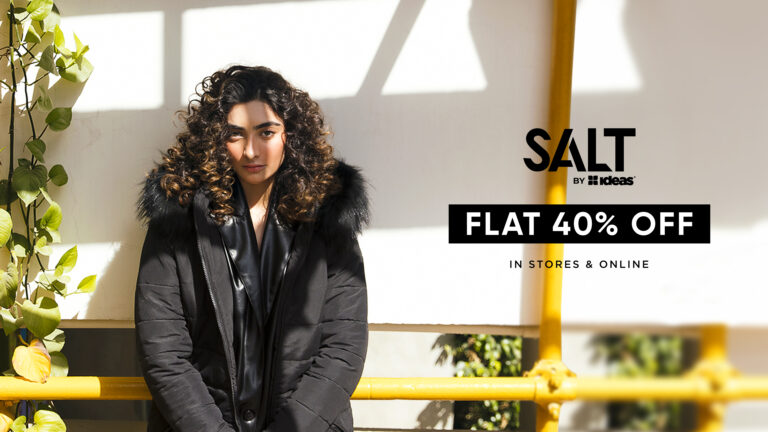
Warmth is the underlying driver of clothing during the winter months and while it might be the ultimate goal, one must also not compromise on fashion while dressing up for winter. Looking wonderful while staying warm is our mantra this season and we have just the right women’s western wear range to fall back on thanks to Salt by Ideas!

This newly launched women’s western wear range features some really trendy jackets, sweaters, dresses and pants. We have put together a list of wardrobe staples just to save you the effort of looking for them. And with the ongoing sale, they are certainly worth picking up. So here goes!

Geometrical Print Dress

Easy-to-wear silhouettes like this long sleeve dress are all the fad. The ruffled panels at the bottom of this dress give it a very flattering shape while the print gives it a modern understated look which is what the year 2023 is all about.

Pink Cropped Knit Sweater

Embrace the sweater weather with this beautiful knit sweater. Looking stylish while being layered up in winters is no easy task but this cropped knit sweater makes our life easy with its minimalistic look and a cut that compliments all body types. Our advice: contrast it with flare pants, or go for simple straight cut jeans for a more casual look.

Tie Dye Jacket

We will not deny our love for neutral colors and subtle looks but it’s also not possible to look past the importance of colors in any winter wardrobe. This tie-and-dye jacket is perfect for those mundane winter mornings when you need an outfit that helps you break free of your everyday boring winter routine. For us, this one’s definitely landing in our shopping cart!

Tie Dye Pants

Channel your inner diva with these tie-and-dye pants that are sure to brighten up your day every time you put them on! We love how this colorful pattern can lift up any winter outfit thanks to it extra swirl and splash of color.

Black Neck Cutout Sweater

Saving the best for last, this black sweater is definitely a must-have in any woman’s western wear closet this winter. We love the sneaky little cutout detail on the neck as it perfectly transforms an everyday outfit into something more trend-focused. You can pair with literally everything in your wardrobe from skirts to distressed denim to formal pants.

So, if you’re a fashion-savvy girl on the lookout for some great buys this season, quickly visit their website to get your hands onto these pieces before stocks run out!

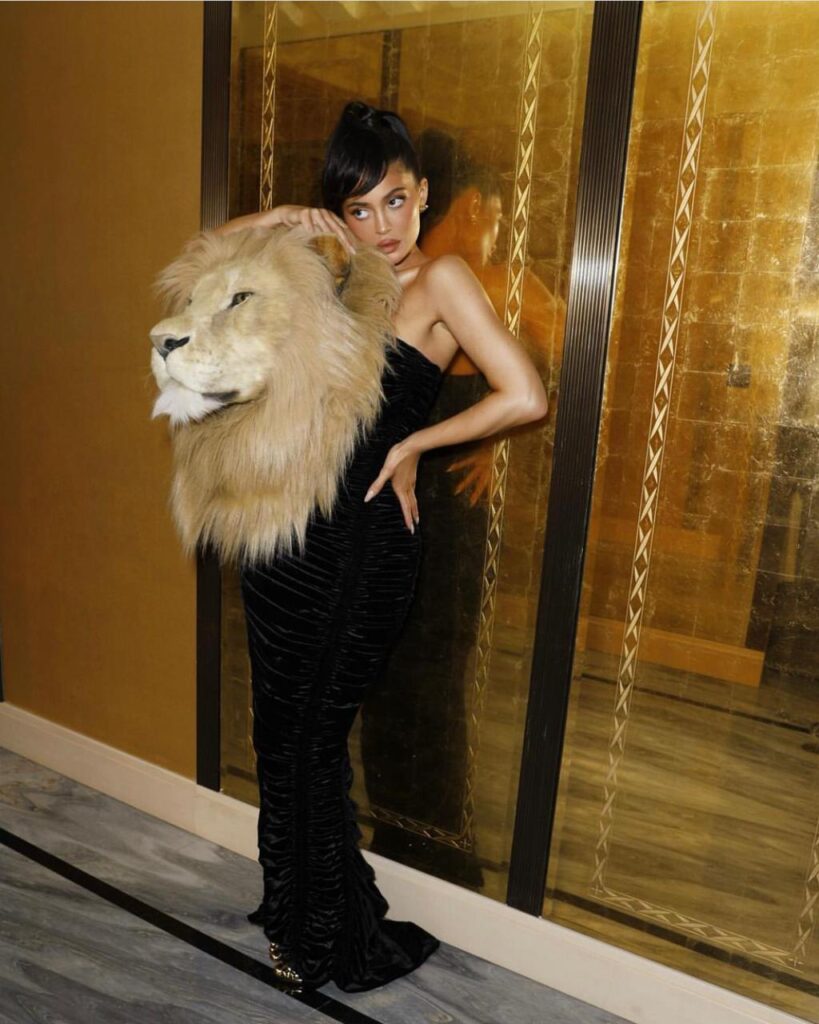
Fans have accused Kylie Jenner of “normalizing animal cruelty” after she wore a dress with a life-sized artificial lion head affixed to it during Paris Fashion Week.

The reality star wore the contentious ensemble to Schiaparelli’s Haute Couture presentation on Monday, January 23rd and viewers were quick to label the look “disgusting” and “sick” due to the lion head.

Kylie described the lion head as a “faux artwork produced by hand using synthetic materials” in an Instagram picture, but that didn’t stop social media from labeling it offensive.

“BEAUTY AND THE BEAST. thank you @danielroseberry and @schiaparelli for such a special morning,” wrote Kylie, “wow i loved wearing this faux art creation constructed by hand using manmade materials. beautiful beautiful”.

“Glorifying animal hunting is not the one”, one user commented underneath Kylie’s post. Another social media user commented “So sad to see celebrities in such platform normalise animal cruelty.”

One social user wrote, “The world today has only 20,000 lions”, adding that her outfit is a “grave insensitivity towards a critical animal.”

Another user wrote, “This is literally promoting more hunting of animals,” with one user questioning, “Are you okay? You are literally promoting animal hunting. Clearly famous doesn’t mean smart or conscious. Does it?”

Kylie reaffirmed her support for the look in the caption, writing “beautiful beautiful” beside a love heart emoji.

Pakistan’s foreign exchange reserves have decreased to $4.3 billion, the lowest level since February 2014, according to the country’s central bank, following the repayment of some of Pakistan’s external debt.

The State Bank of Pakistan (SBP) published the data on Thursday, adding that commercial banks have $5.8 billion, for a total of approximately $10.1 billion.

The IMF disbursed a $1.17 billion tranche in August of last year, but the next batch of funds has been stalled since Pakistan has yet to agree to the lender’s several criteria, such as raising energy costs and extending the tax base.

Last year, Pakistan was also hit by disastrous floods, which killed over 1,700 people, affected 33 million people, and cost the country more than $30 billion. Pakistan hosted an international donors’ summit with the United Nations earlier this week in Geneva when the world community promised more than $10 billion over the next three years.

Experts, on the other hand, have painted a bleak picture, arguing that the government should shift its focus from finding short-term fixes to more long-term reforms. According to Sakib Sherani, an economist based in Islamabad, Pakistan faces more than $20 billion in debt payback obligations over the next two years.

“In 2017, our yearly debt repayment was close to $7 billion. Over $20 billion is expected this year and next. We can’t help but borrow more, and while it may be a short- to a medium-term solution, it’s simply unsustainable,” Sherani explained in an interview.

He stated that Pakistan’s debt obligations should be restructured and that the government should develop a clearer plan for its economic strategy.

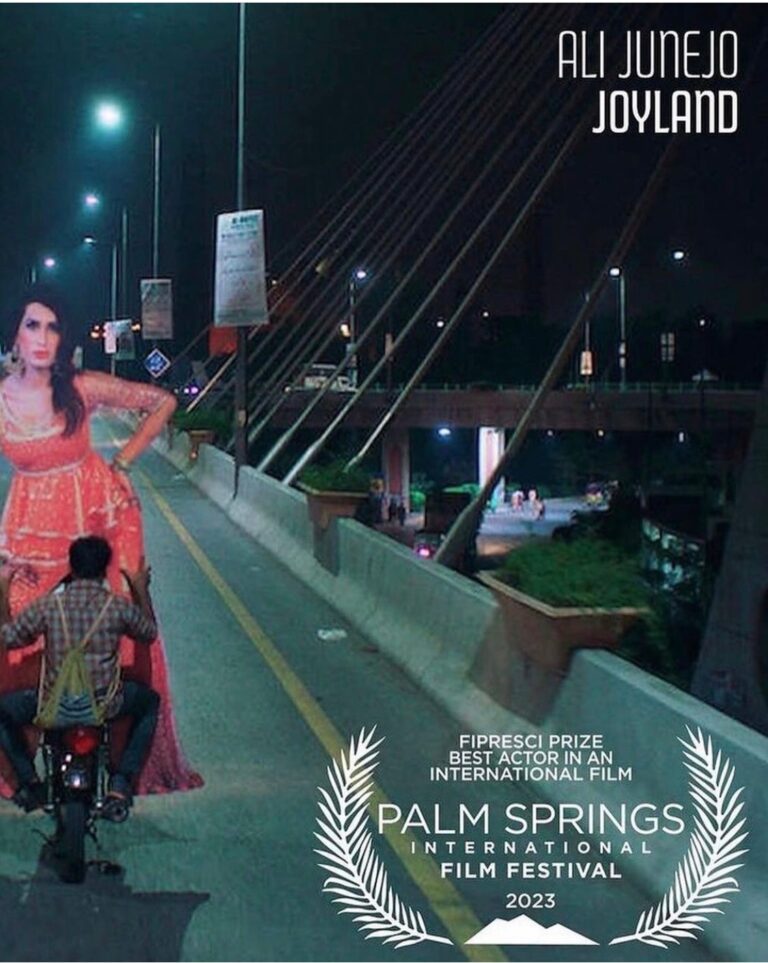
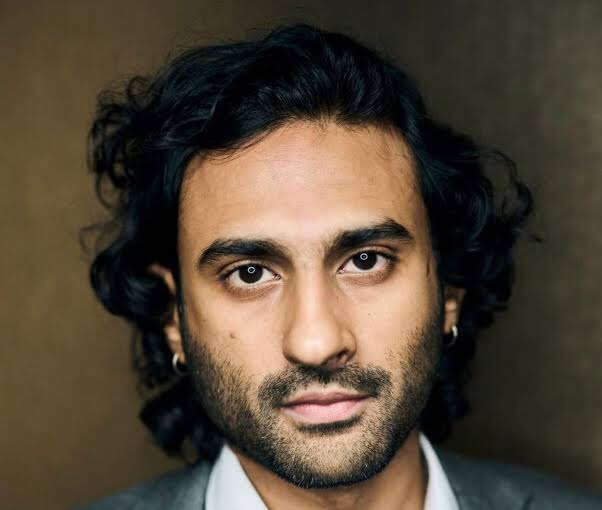
We’re off to a fantastic start this week with the announcement that Saim Sadiq’s Joyland has won an award at the Palm Springs Film Festival. Ali Junejo, who plays Haider in the highly acclaimed film, was named Best Actor at the prestigious event. The announcement was made on Joyland’s social media platforms as well as the official website of the Palm Springs Film Festival. Junejo, who was unable to accept the prize in person, conveyed his gratitude in a video greeting.

In the clip, he said “I’m really humbled, this is a huge honour. I am so proud that our little baby, Joyland, has gotten where it has. It’s been around the world, and it’s been getting so much love from so many people. It’s really touching.”

He continued, “I remember when we were making this film in Gawal Mandi, we just wanted to tell this story as honestly as possible. And look at where we are; the fact that I am doing this, the fact that we are shortlisted for the Academy Awards, it is the most amazing thing.” Junejo continued to thank his director, Sadiq, for trusting him to essay Haider in the award-winning film.

He then expressed gratitude to Rasti Farooq, Alina Khan, and the rest of the cast for assisting Haider in finding his way. Junejo also thanked the crew and producers Sarmad Khoosat and Apoorva Guru Charan. “This is for all of us,” Junejo commented. “These characters have found such a place in my heart, and I know all of us feel that way. I hope anyone who watches this also thinks the same.”

The actor thanked his theatre family at the end of his award speech. “You guys, Sunil, Fawad – you believed in me for all these years, look at where we are now,” he said.

The jury also mentioned honoring Junejo for his outstanding performance in the successful picture. The statement read, “We award the Best Actor Prize to Ali Junejo in Joyland for his intimate, thoughtful, and nuanced performance as Haider, a man grappling with his diverging sense of self and familial responsibility.”

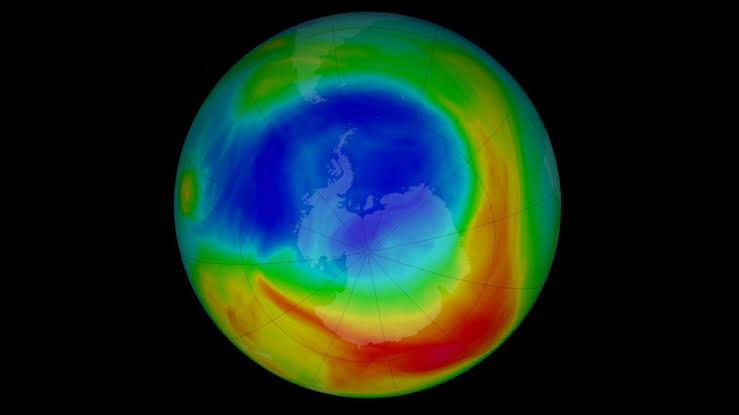
The Earth’s ozone layer is on its road to recovery, thanks to decades of work to eliminate ozone-damaging compounds, according to a group of worldwide experts supported by the United Nations.

The ozone layer performs a crucial role for all living organisms on Earth. This stratospheric shield protects humans and the environment from the sun’s dangerous UV radiation.

In May 1985, scientists detected a hole in the ozone layer, which frightened the international community. Scientists had previously discovered that compounds like chlorofluorocarbons, which are utilized in the production of aerosol sprays as well as solvents and refrigerants, might deplete ozone.

Two years following the discovery of the ozone layer’s deplorable status, international agencies adopted the Montreal Protocol. This mandated the elimination of nearly 100 synthetic compounds linked to the deterioration of the critical ozone layer.

The last assessment of the Montreal Protocol’s success indicated that approximately 99% of banned ozone-depleting chemicals have been phased out.

If current practices are maintained, the ozone layer is likely to rebound to 1980 levels by 2040, according to the United Nations. It may take longer in some areas. Experts predict that Antarctica will rebound to 1980 levels by 2066, while the Arctic will recover by 2045.

Taking what we’ve learned from this remarkable year into account, we may set life-changing goals to live better lives as balanced and mindful Muslims.

Here are some New Year’s Resolutions for Muslims that we can implement in our life.

Elevate your prayers

When the five daily prayers become a part of our daily habits, they can become monotonous and robotic activities. For example, by altering the typical Suras (Chapters) we read or the Duas (Supplications) we recite after prayer, we may become more present and attentive to what we are saying during our prayers.

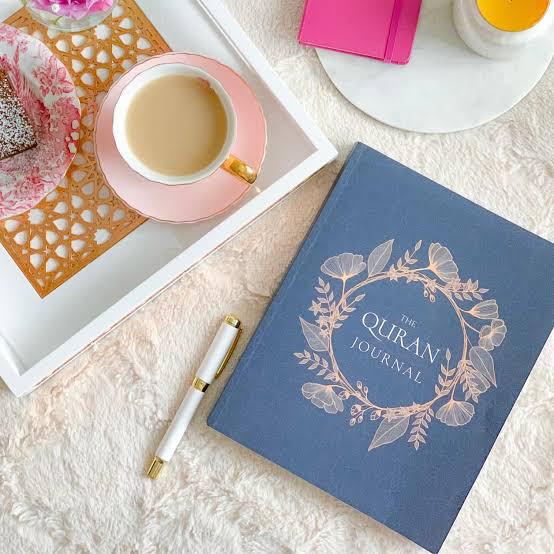
Start Quran Journalling

Islam is all about education and learning. Muslims should strive to comprehend God’s messages and connect with the Quran.

Practice Gratitude

Don’t leave your daily prayers without spending at least 2 to 5 minutes grounding yourself in Sujood (prostration) and reflecting on all the small things for which you are grateful, such as good health, family, and friends.

Give more charity

All Muslims are expected to provide charity (zakat). Find a charity that is near to your heart and establish a monetary goal for yourself.

Surround yourself with positivity

Take some time to consider the individuals in your life; are any of them bringing you down or filling your life with negativity? Surround yourself with people who care about your success, who make you laugh, and who care about you. Test it out and discover how it affects your life!

Get Healthy

We would all be healthy if we all followed Islamic eating etiquette. Simple modifications such as not eating on an empty stomach or introducing sunnah fasting twice a week (Mon & Thurs) can help.

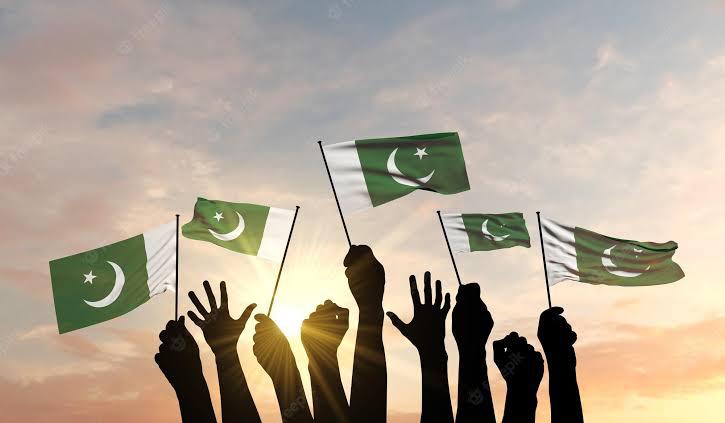
The Pakistani Taliban’s most recent attack, a suicide bombing in the capital last Friday, left one police officer dead and six others injured.

According to an investigation by a foreign media outlet, the Tehreek-i-Taliban Pakistan (TTP), which banned and broke the cease-fire with Islamabad last month, has carried out several attacks across the nation.

The Afghan Taliban, who took control of Kabul last year, has been asked by Pakistani authorities to use their clout to persuade the TTP to make peace with Islamabad, but multiple rounds of negotiations have failed to produce a fruitful outcome.

As shelling from Afghanistan along its border with Pakistan has killed several civilians, Pakistan faces multiple security threats from both the TTP and the new authorities in Kabul. Since the current administration does not have the public support to address the security issue or the financial resources to do so, it is possible that it may get worse in 2023.

Analysts are concerned that Pakistan could wind up like its neighbour Sri Lanka in terms of being unable to pay its debts, lacking foreign reserves, and dealing with unmanageable, spiralling inflation as the year ends. After the State Bank of Pakistan unexpectedly increased interest rates to combat inflation in November, the country’s consumer price index reached a level of about 24 percent. In the fiscal year 2023, Pakistan is expected to pay back more than $26 billion in foreign debt.

The inflation rate climbed to an all-time high of 14.9% in October. The Pakistani rupee has never been lower than the US dollar, and regular people cannot afford the high price of gasoline.

The foreign exchange reserves of Pakistan have decreased to $6.7 billion, the lowest amount in the previous four years, according to the central bank of Pakistan.

According to Niloufer Siddiqui, a political science professor at the State University of New York, “Pakistan will continue to face a number of issues in the coming year; a worsening economic crisis amid a developing political instability.”

“In 2023, the government will focus on the usual short-term fixes that buy Pakistan more time but ultimately don’t end up solving the underlying problems, until the cycle plays out anew. So, we can expect Islamabad to look for more bailout funds from the usual suspects — China and the Gulf countries,” Michael Kugelman, a South Asia expert at the Washington-based Woodrow Wilson International Center for Scholars, said.

Former Pakistani ambassador to the US and Hudson Institute director for South and Central Asia Husain Haqqani claimed that Pakistan has not made any human capital investments in the previous seven decades. Instead of luring in varied investments, it survives on textile exports and foreign borrowing. There is no indication of the crucially needed fundamental economic reforms, but it would likely avoid default through a combination of increased borrowing and decreased imports, he told the media source.

Pin It