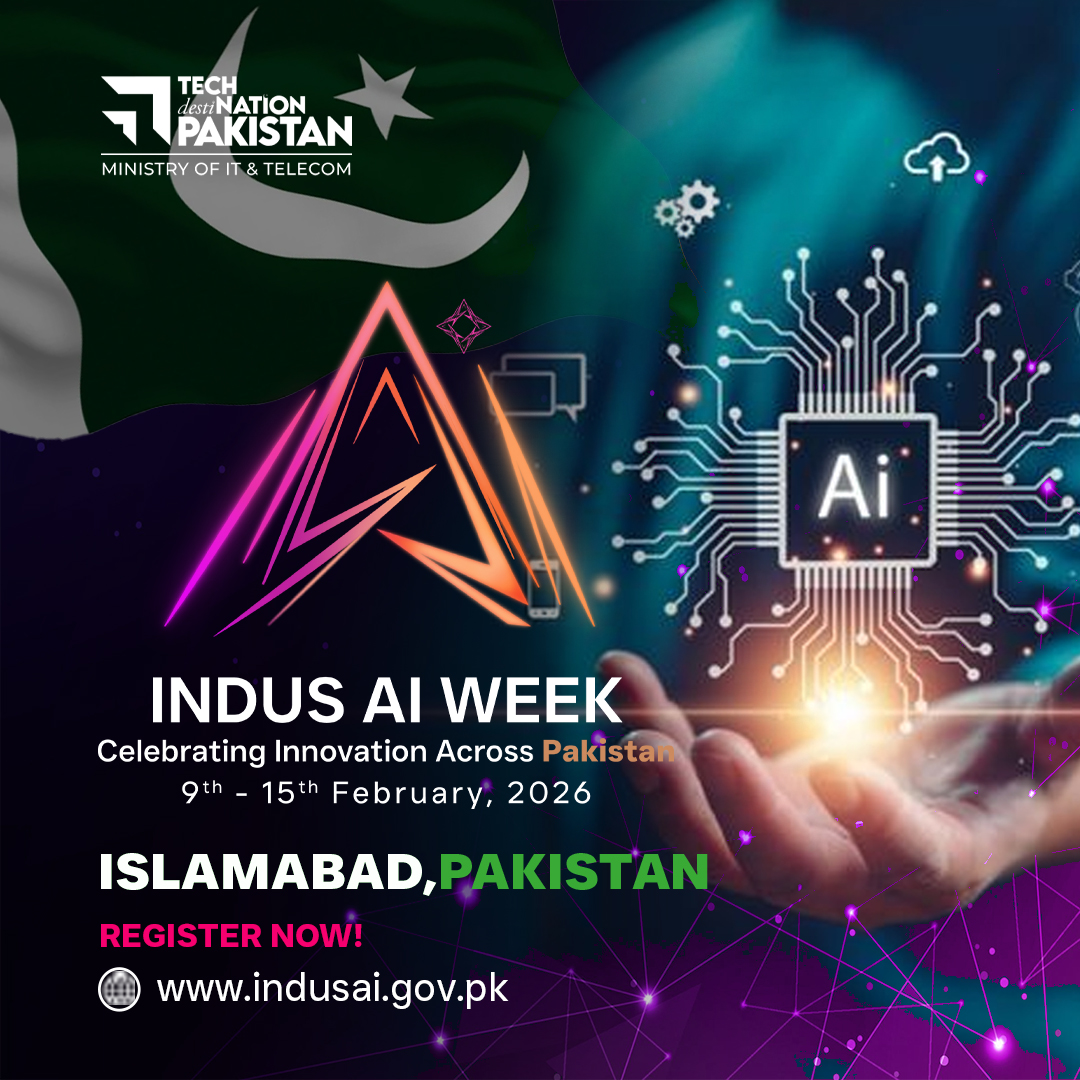
Pakistan stands at a technological crossroads that will define the next generation’s economic trajectory, yet most of the country remains blissfully unaware of what’s at stake. While neighboring India has positioned itself as a global AI powerhouse with billions of dollars in AI investments and China dominates the AI patent landscape, Pakistan is still debating whether AI matters. Indus AI Week isn’t arriving as just another tech conference with panel discussions and networking coffee breaks. It’s arriving as an urgent alarm bell, designed to shake the nation out of complacency and force a collective reckoning with a simple truth, the AI revolution is happening with or without Pakistan, and the window to catch up is closing faster than most realize.
Indus AI Week confronts this paralysis head-on by gathering the stakeholders who can actually change Pakistan’s trajectory, policymakers who can create enabling frameworks, educators who can redesign curricula, industry leaders who can fund training programs, investors who can back AI startups, and diaspora professionals who possess the expertise and networks to bridge Pakistan’s knowledge gap. This isn’t about inspiring speeches and motivational storytelling. It’s about concrete action planning, identifying which sectors AI will disrupt first in Pakistan, determining what infrastructure investments are non-negotiable, deciding how to retain AI talent that currently moves abroad, and establishing the partnerships that can accelerate capability building before competitors capture the opportunities Pakistan is leaving on the table.
The wake-up call extends beyond technology professionals to every sector leader who assumes AI is someone else’s concern. Healthcare administrators who think AI-powered diagnostics are a distant future need to understand that Indian hospitals are already using them to outcompete Pakistani facilities. Retail executives comfortable with traditional business models need to reckon with AI-driven competitors analyzing customer behavior in real-time. Manufacturing leaders satisfied with current processes need to confront automation realities that will likely make their factories obsolete within a decade. Agricultural businesses ignoring precision farming AI will find themselves undercut by regional competitors squeezing higher yields from fewer resources. The disruption isn’t theoretical, it’s happening now, and indifference guarantees irrelevance.
For diaspora professionals watching from Silicon Valley, London, Dubai, and Toronto, Indus AI Week represents something equally urgent, perhaps the last clear opportunity to influence Pakistan’s AI direction before the country either commits to a strategic path or slips into permanent technological dependence. Your expertise in AI product development, machine learning research, data infrastructure, and technology commercialization can compress Pakistan’s learning curve by years, but only if you engage now, while frameworks are still being established and directions are still being set. Remote observation won’t cut it anymore. This moment demands active participation.
Indus AI Week is your entry point to shape Pakistan’s AI future before that future is decided without you. Clear your calendar, and show up prepared to contribute, not as observers, but as builders of the ecosystem Pakistan desperately needs. The event isn’t asking for your interest, it’s demanding your involvement. Pakistan has missed too many technology waves by treating urgent transitions as casual conversations. The AI revolution won’t wait for the country to get comfortable. Indus AI Week is the wake-up call. The only question left is whether Pakistan and its global diaspora will finally answer it.

Comments are closed.